

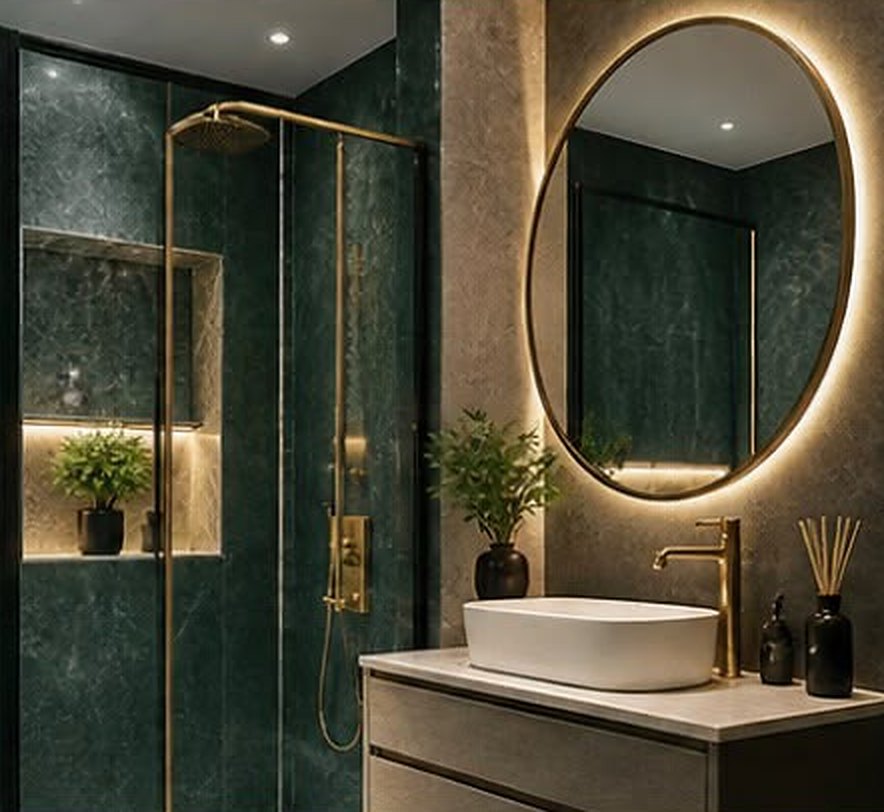
For most bathrooms, porcelain is the best all-round choice for floors and shower walls: it absorbs almost no water, wears well and comes in finishes that look like stone, concrete or wood. Ceramic is a good, often cheaper choice for walls outside the shower. Natural stone gives a finish nothing else quite matches, but it needs sealing and gentler cleaning -- a real consideration in a hard-water area like Surrey.
Porcelain vs ceramic vs stone at a glance
| Porcelain | Ceramic | Natural stone | |
|---|---|---|---|
| Water absorption | 0.5% or less | Typically above 3% | Varies by stone; needs sealing |
| Best for | Floors, showers, wet rooms | Walls, splashbacks | Feature walls, floors, statement bathrooms |
| Durability | Very hard-wearing | Good on walls; softer body | Varies; marble and limestone scratch and etch |
| Weight | Heavy, especially large formats | Lighter | Often the heaviest |
| Cutting and fitting | Harder; needs good tools and flat walls | Easier | Skilled work; variable thickness |
| Upkeep | Low | Low | Regular sealing, pH-neutral cleaners |
| Cost | Mid to high | Low to mid | Mid to very high |
Porcelain
Porcelain is a type of ceramic fired at higher temperatures from denser clay, which is why its water absorption is 0.5% or less. That makes it the natural choice for shower floors, wet rooms and anywhere that gets soaked daily. Through-body and colour-body porcelain also hide chips better than glazed tiles.
The trade-offs are weight and preparation. Large-format porcelain needs very flat walls and floors, and it's heavy: British Standard guidance limits tiles, adhesive and grout to around 32kg per m² on plasterboard, so big tiles need the wall build-up planned first. It's also harder to cut neatly, which matters around niches, pipes and window reveals.
Ceramic
Ceramic wall tiles are lighter, easier to cut and usually cheaper. Their body absorbs more water than porcelain, but the glaze does the work on the surface, and on a properly tanked wall they're perfectly fine inside a shower too. Where ceramic is less suited is on floors that get wet and heavy use. Metro tiles, handmade-look glazes and patterned wall tiles are mostly ceramic.
Natural stone
Marble, limestone, travertine and slate each have their own character, and no two tiles are quite the same. Stone needs sealing before grouting and resealing periodically, and many stones -- marble and limestone especially -- are etched by acidic cleaners. That's the catch in a hard-water area: most limescale removers are acidic, so a marble shower needs a pH-neutral cleaning routine and a squeegee habit rather than a limescale spray.
Slip resistance: what the ratings mean
A tile's PEI rating measures how well its surface resists wear, not grip. For grip, look for a pendulum test value (PTV) or an R rating. In the UK, a wet PTV of 36 or above is classed as low slip potential, and R10 or higher is the usual minimum for bathroom floors. Polished and gloss finishes are for walls; matt, textured or honed finishes are for floors, especially in walk-in showers and wet rooms.
Which to choose, room by room
- Shower floor or wet room: textured porcelain, or small-format stone or mosaic with a good wet slip rating.
- Shower walls: porcelain or glazed ceramic, over tanking.
- Bathroom floor outside the shower: porcelain for durability; stone if you're happy to maintain it.
- Feature wall or splashback: anything goes -- this is where patterned ceramic or a statement stone works best.
- Period homes with uneven walls: smaller formats, which follow gentle undulations far better than large porcelain slabs.
Bathroom tile FAQs
Can you use ceramic tiles in a shower?
Yes, on the walls. A glazed ceramic tile sheds water well, and the waterproofing behind it is what protects the wall. For a shower floor, porcelain is the better choice because it absorbs far less water and copes better with standing water and foot traffic.
Do porcelain tiles need sealing?
Glazed porcelain doesn't. Some unglazed and polished porcelain benefits from a sealer, because polishing can open up tiny pores that hold dirt. Check the manufacturer's guidance for your tile, and always seal natural stone. Grout is a separate question: cement grout in a shower benefits from a sealer or a stain-resistant formula, whatever the tile.
Is marble a bad idea in a hard-water area?
Not a bad idea, but a commitment. Limescale builds up quickly in Surrey, and the acidic cleaners that remove it will etch marble. If you choose marble for a shower, plan to squeegee after use and clean with pH-neutral products.
Choosing tiles for a new bathroom? Bring us your shortlist and we'll tell you how each will perform on your walls and floor before you order. See our bathroom tiling service or ask for a free quote.